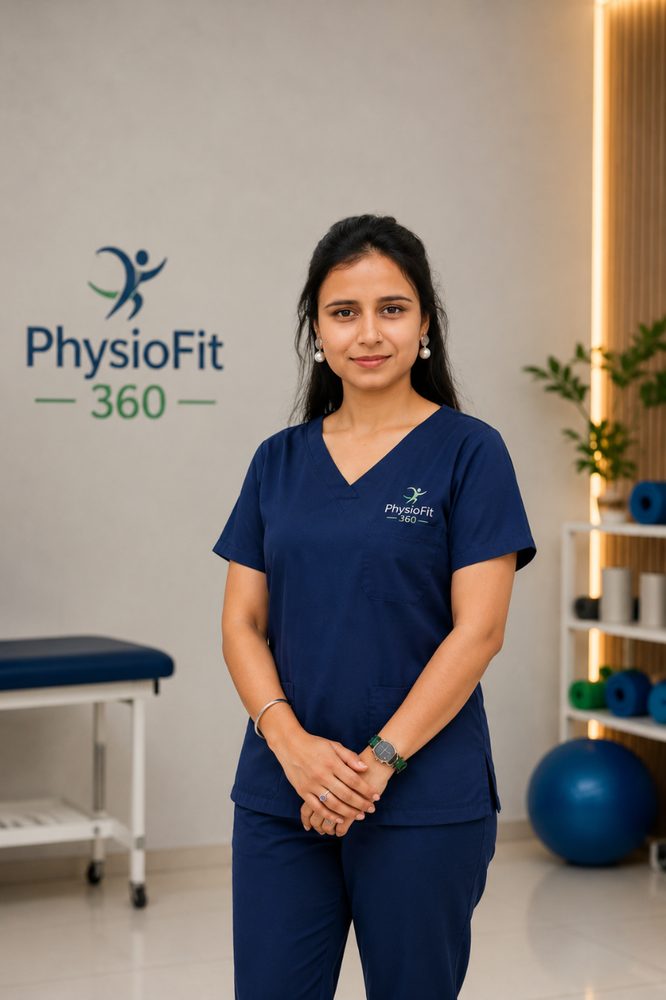
Dr. Shivani Chauhan
BPT, MPT (Ortho)
Orthopedic Physiotherapy & Musculoskeletal Rehabilitation
- Orthopedic Physiotherapy
- Musculoskeletal Rehabilitation
- Orthopedic Rehabilitation
- Pain Management
- Functional Recovery
Professional Overview
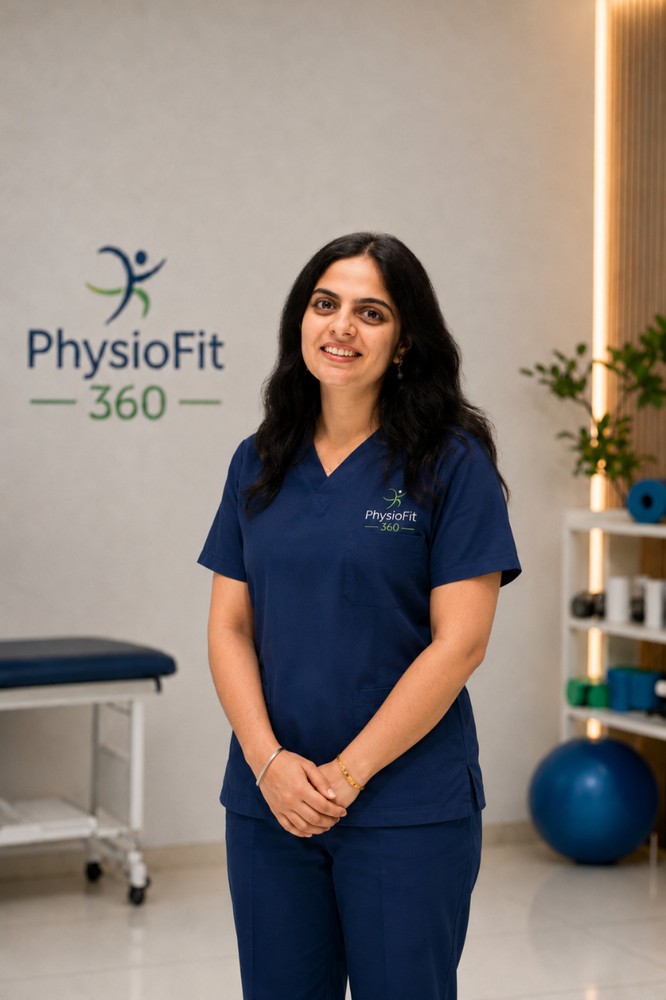
Dr. Shivani Chauhan holds a BPT and an MPT with a specialisation in Orthopaedics, and practises within the orthopaedic and musculoskeletal side of physiotherapy at Physio Fit 360.
Orthopaedic physiotherapy is concerned with the musculoskeletal system — bones, joints, muscles, ligaments and tendons — and with the movement problems that arise when any part of that system is stiff, weak, painful or recovering. It is a field defined less by a single technique than by a way of reasoning: identifying which structures and movement patterns are contributing to a limitation, and then rebuilding mobility, strength and function in a graded way.
The rehabilitation goals associated with this specialty are practical ones. They tend to be described in terms of what a person can do — climbing stairs without hesitation, sitting through a working day, lifting comfortably, sleeping without disturbance — rather than in abstract terms. Pain management is approached as one component of that broader functional picture rather than as the sole objective, since comfort and capability usually improve together.
Within the team, Dr. Shivani's stated focus places her among the clinicians whose work centres on orthopaedic and musculoskeletal recovery and the restoration of everyday function.
Specialization & Clinical Focus
Musculoskeletal rehabilitation begins with a structured assessment: how a joint moves, how much range is available and where it stops, how muscles around the region behave, and how the person performs functional tasks. That assessment gives a baseline against which progress can be measured, which matters in a field where change is often gradual.
Joint and soft-tissue concerns form a large part of the work. Stiffness may follow a period of immobilisation; a muscle may become deconditioned when a region has been guarded; a tendon may have lost the capacity to accept the load it once handled comfortably. Each of these situations calls for a different balance of mobility work, strengthening and load management, which is why orthopaedic rehabilitation is rarely a fixed protocol.
Movement limitation is the practical problem most people present with. Rehabilitation typically addresses it on several fronts at once: improving available range so the movement is physically possible, improving strength so it is sustainable, and improving control so it is comfortable and repeatable. Flexibility work often supports the first, progressive resistance the second, and task-specific practice the third.
Pain-related functional problems are handled as part of this process. Where pain limits what a person is willing or able to do, rehabilitation generally aims to widen the range of tolerable activity gradually, using graded exposure and clear explanation, rather than avoiding movement altogether. Recovery following orthopaedic concerns — including periods after surgical or medical management directed by the treating doctor — follows the same staged logic, with progression matched to healing timelines and individual response.
The overall aim throughout is functional independence: the ability to manage daily activity without needing to organise life around a limitation.
Areas of Clinical Focus
Orthopedic Rehabilitation
Structured rehabilitation for musculoskeletal regions affecting bones, joints and surrounding soft tissue. Progression is matched to healing timelines and individual tolerance.
Joint Mobility
Work directed at restoring available and usable range in stiff or restricted joints. Combines mobility exercise with graded functional movement.
Strength Restoration
Progressive strengthening for muscles that have become deconditioned during a period of reduced use. Supports both comfort and long-term function.
Pain-Related Limitation
Rehabilitation aimed at gradually widening the range of movement and activity a person can tolerate. Approached through graded activity and clear explanation.
Functional Movement
Practice of the everyday tasks that matter — standing, walking, stairs, lifting, reaching. Bridges clinical exercise and real-world capability.
Functional Independence
The long-term goal of orthopaedic rehabilitation: managing daily activity without planning around a physical limitation. Reviewed throughout the rehabilitation plan.
Rehabilitation Needs This Specialty Addresses
- Musculoskeletal Rehabilitation
- Joint Mobility
- Functional Movement
- Pain-Related Limitations
- Strength Restoration
- Mobility Improvement
- Recovery Following Orthopedic Concerns
Rehabilitation Goals
Rehabilitation goals in orthopaedic physiotherapy are typically layered. In the early stage, the aim is usually to restore accessible movement in a stiff or guarded region and to help the person move more comfortably within a safe range. Establishing that baseline makes everything that follows possible.
The next set of goals generally concerns strength and flexibility. Muscles around a region that has been rested tend to lose conditioning quickly, and restoring that capacity supports both joint function and comfort. Flexibility work is used where restricted tissue length is limiting a functional movement rather than as a routine addition.
Functional goals then take priority: performing the specific tasks a person needs in daily life — stairs, carrying, sitting or standing for longer periods, household or work activity — with less limitation. Reducing functional restriction, rather than chasing a particular measurement, is usually the more meaningful marker of progress.
Longer term, goals often include maintaining mobility and strength through a manageable routine and understanding how to manage variation in symptoms. Individual results depend on the underlying condition, medical advice and consistency with rehabilitation.
Who May Benefit From This Area of Physiotherapy?
Orthopaedic physiotherapy is generally relevant to people whose difficulty involves the musculoskeletal system and its effect on everyday movement.
- People experiencing musculoskeletal movement limitations
- Individuals in a rehabilitation phase following orthopaedic concerns, as advised by their treating doctor
- People experiencing joint stiffness or restricted range
- Individuals whose strength has reduced after a period of inactivity
- People whose daily activities are limited by pain-related restriction
- Individuals working towards improved mobility, strength and functional independence
Approach to Physiotherapy
Orthopaedic rehabilitation is generally guided by assessment and review rather than by fixed protocols. Two people with a similar-sounding problem may present very differently in terms of range, strength and confidence, so the plan is shaped around the individual's baseline and goals.
Progression is deliberate. Loads and ranges are increased in steps that the person can tolerate, allowing tissue to adapt rather than be provoked. Where a condition is under medical management, rehabilitation is kept consistent with the advice of the treating doctor.
Education plays a substantial role. Understanding why a joint feels stiff in the morning, why strengthening is relevant to comfort, or why a certain movement is being reintroduced tends to make people more consistent and less apprehensive. Rehabilitation depends heavily on what happens between appointments, so home programmes are usually kept realistic and specific.
Movement quality is emphasised alongside quantity — how a task is performed matters as much as whether it can be completed. Plans are reviewed regularly and adjusted according to response, with expectations discussed openly rather than presented as guarantees.
Why This Specialty Matters
Musculoskeletal limitations affect people in an unusually practical way: they change what someone is willing to attempt. A stiff shoulder alters how a person dresses; a knee that feels unreliable changes how they approach stairs. Over time those adjustments reduce activity, and reduced activity tends to reduce capacity further.
Orthopaedic physiotherapy matters because it works directly against that cycle. By restoring range, rebuilding strength and reintroducing functional tasks in a structured way, it helps people return to activities they had begun to avoid, and it does so in a way that can be maintained.
There is also a longer view. Understanding how to keep joints mobile and muscles conditioned gives people a durable tool for managing their own musculoskeletal health, which becomes increasingly relevant with age, workload and changing activity levels.
Part of the Physio Fit 360 Team
Working inside a multidisciplinary physiotherapy clinic means a patient is never limited to a single perspective. At Physio Fit 360, physiotherapists with different areas of specialisation — manual therapy, sports rehabilitation, orthopaedic care, neurological rehabilitation and general physiotherapy — practise under one roof in Sector 22B, Chandigarh. That shared environment makes it easier to match a person with the clinician whose focus best fits their rehabilitation needs, and to discuss a case collaboratively when a recovery journey touches more than one area. It also supports continuity: assessment, progression and review happen in the same place, with the same standards of care and communication. For patients, the practical benefit is straightforward — specialised attention within a team that understands rehabilitation as a shared, structured process rather than a series of isolated appointments.
Meet More of Our Team
Ready to Take the Next Step?
Connect with the Physio Fit 360 team to discuss your physiotherapy and rehabilitation needs.